
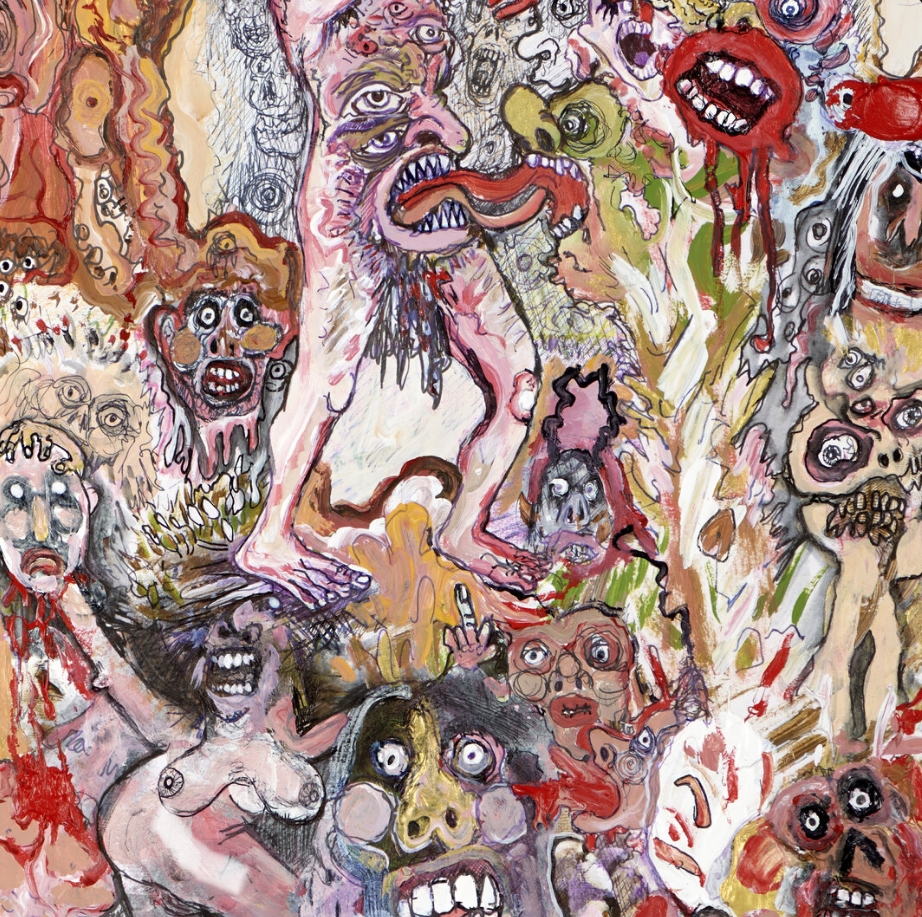
| ⭐⭐⭐ |
The Bug Club got their start as a blues band. That is where all of this begins. They cut their teeth on local circuits in Wales, built themselves a bit of a reputation, even getting so far as to support Status Quo at one point. By no means newbies when it comes to playing as a band, their latest helping is a part of their gradual continuation into a more traditional indie rock methodology. Very clearly taking notes from some of the more left-field bands of the 90’s alternative boom, acts like Superchunk, Archers of Loaf, even a little dose of Brainiac, though more sparing on the bolder quirks. This launching pad of influences allows them a wealth of possibilities on the execution and identity side of things.
For the most part, The Bug Club conjures up a hearty blend of garage and lo-fi indie rock. Their playing is more than proficient, but never so technical as to cancel out their aesthetic intentions. Sam Willmett and Tilly Harris harmonise effectively, adding depth to their already strong sense of melody. There’s a consistent Strokes-esque distortion on the vocals that reinforces this DIY approach too. Everything on this album is primed for my ears, and on paper this should be a knock out of the park.
The problem arises when we delve into the actual songs themselves. Now, before I get too ahead of myself, I want to acknowledge that I think this band is showing a lot of potential. For as much as I may feel that these songs leave something to be desired, I would be remiss if I didn’t mention some key highlights that I believe are pointing The Bug Club in the right direction.
The album kicks off proceedings with the sour fuzz of ‘Full Grown Man’. In short, it reads like a lamentation on growing up. More specifically, not knowing how to grow up. Within the broader scope of the album, it is a necessary way to set the tone. Much of this record deals with feeling alien, having never learned how to be a proper human. This same sentiment of being out of place crops up repeatedly deeper into the project. The nimble ‘Living In The Future’ highlights a growing trend of apathy within our communities, “you took a tumble, but nobody thought to ask you if you were okay”. This is the disconnected future we’ve got to look forward to, and the mostly dejected vocal delivery hints towards this desensitisation we’ve allowed for ourselves. The southern rock closer ‘Appropriate Emotions’ takes this idea of incapability when it comes to simply experiencing natural feelings, and applies it in a romantic context. It’s a juxtaposition that feels right, given this record’s constant battles with its own existence.
For all of this album’s accuracy in detailing the dystopian reality of our modern age, The Bug Club suffers from a severe lack of identity. Musically, they paint themselves into a bit of a corner by the record’s end, or at least one that is perceived by the band themselves. Not only this, but the songwriting itself becomes too one-note, and therefore predictable to be truly exciting for the duration.
‘Muck (Very Human Features)’ is The Bug Club’s only real attempt at a proper stylistic shift, and it fails on account of being far too stagnant to support Willmett’s ramblings. This could have been a much better titular piece for the project, had there been a genuine attempt to see the experiment through. I can appreciate and understand what is being shot for, and that should probably be all that matters. Yet I can’t seem to shake some sense of disappointment.
There is potential to be found here. This is a melodically-rich album, and the performances do a lot to pick up any structural slack. If you like your indie fried to heck, sardonic in spades, and familiar in terms of its presentation, then ‘Very Human Features’ is your poison. If you look for a bit more versatility in a tracklist, or you want to be left-hooked by something unheard of, you may just walk away from this thing feeling underwhelmed. The Bug Club have another couple of gears in them, and I want to hear them shift into it pronto.
 Dan Will Review