
| ⭐⭐⭐⭐ |
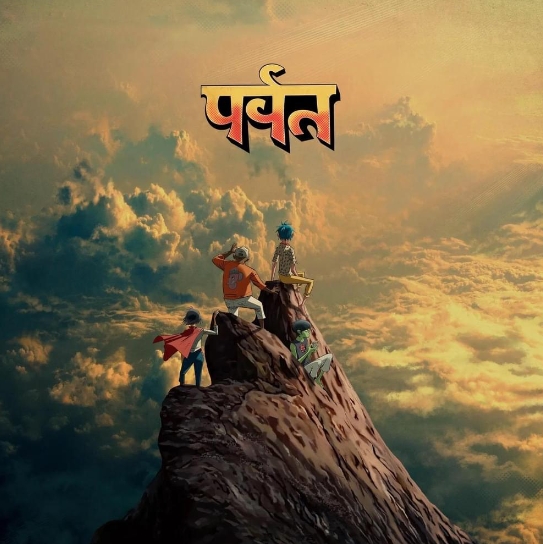
There are many ways artists can transcend. They can capture an atmosphere and a sonic palette that goes far beyond our earthly realm. They can employ thematic ideas that explore the very idea of transcending itself. They can expand on their existing stylistic repertoire, graduating from their usual conventions for something more widely-reaching. They don’t always have to pick a single path either. Sometimes, like in the case of Gorillaz and their latest, they decide to do all of the above. The level of ambition that is present in ‘The Mountain’ rivals that of another high watermark for their discography: 2010’s critically and fan-acclaimed ‘Plastic Beach’. The singular core concept is a big commonality between these two records, and it has made for another success. Hyped up by the release of singles like “The Happy Dictator” and “Orange County”, both are mellower than one might have expected to be leading up to such a seemingly ambitious release. However, the notable Sparks feature on the former cut contributes the level of sticky, off-kilter fun that is to be expected in your typical Gorillaz fare. The latter is uncharacteristically mournful, yet is nevertheless a standout, synthy sing-along.
Gorillaz have always been musical chameleons. Difficult to pin down to a root genre, yet recognisable in their quirks all the same. The diversity is the point, whether they’re jamming on some fat dance beats, kooky psych numbers, animated hip hop cuts, or even some Afro-jazz or Latin pop. There is really no ceiling when it comes to their musical explorations. Yet again, they swerve left into an entirely fresh soundscape. Pulling generously from Hindustani classical music, they waste no time exercising their newly-formed muscles. The introductory title track establishes not only the universe of the record, but this idea of transcending across the project. I forgot to mention earlier, but Gorillaz don’t just simply function within our mortal realm on this album. No, they see themselves fit to include several posthumous features across the album. Dennis Hopper’s voice is first cab off the rank on “The Mountain”. Beyond this point, a surprise Proof verse graces the 7 minute behemoth “The Manifesto”. It is bouncy, full of zany joy, injected with some Latin flare (aforementioned) thanks to the enthused rapping of Trueno, and elevated by the skilled echoes of someone no longer with us. This is not out of place, or random. The album is ultimately a journey towards the afterlife. It is a beautiful acceptance of mortality and the process of progressing to that next phase.
To add to this trend of calling upon the dead, the late post-punk legend Mark E. Smith (The Fall) shows up on the driving, psychedelic synth-pop number “Delirium”. Smith’s cries of the track’s title ring out like a mischievous spectre demanding chaos from a crowd. It’s not so much hellish as it is like a moment of purgatory along our narrative journey. Like we’re realising for the first time that we’ve truly passed, and our spirit guide is a sarcastic old British man who’s been where he is for way too long. One instance of this happening could be brushed off as a coincidence, it happening twice is a pattern. While the rest of the project is firmly aided by the voices and talents of the living, the soul of the music becomes increasingly ethereal. It culminates in the final death march of “The Sad God”. The *third* Black Thought verse rounds out this idea of life and humanity and the spiritual aptly. Specifically, it is a lamentation on our hubris from God’s perspective. We’ve transcended/ascended, we’ve reached the heavens, and all we find is an entity disappointed in us. ‘The Mountain’ can ultimately be considered a futile climb. That destination when all is said and done is something that we down here on this mortal coil are not ever going to be prepared for. It will reveal about us things unflattering to our delusions. It will lift the wool and show us we were running in circles, our goals an extension of our insecurities. Both in an earthly and a spiritual sense, to truly transcend is to shed our egoistic baggage; as is the case all throughout Hinduism. If you can stomach it, then the universe is your oyster.
 Dan Will Review